

AUSTIN — House Energy Resources Chairman Drew Darby, R-San Angelo, has opened a public fight with Railroad Commissioner Wayne Christian over a new Railroad Commission policy that drops the automatic public-comment slot from monthly open meetings.
Darby sent Christian an Aug. 25 letter calling the change a rollback of a 21-year practice. Christian answered the next day that public input “has not been canceled, banned, restricted or censored.” Darby then issued a follow-up statement saying staff listening sessions are not a substitute for speaking to the three elected commissioners who actually vote.
The House Energy Resources Committee already has an RRC oversight hearing on the calendar for Tuesday, Sept. 15. Darby wrote that he will add the comment policy to that agenda and “expect[s] you to be prepared to address it on the record.”
The Railroad Commission of Texas is the state’s oil and gas regulator. Despite the name, it has not regulated railroads since 2005. The three elected commissioners oversee oil and gas production, pipelines, natural gas utilities, critical energy infrastructure, and surface coal and uranium mining.
On Aug. 18, commissioners adopted a new Public Engagement and Participation Policy on a 2-1 vote. Christian introduced it. He and Commissioner Jim Wright voted yes. Commissioner Christi Craddick, who was elected as the new chairman that same day, voted no, saying Texans should still be able to speak at open meetings.
For nearly 21 years, since September 2005, every RRC open-meeting agenda automatically included a general public-comment item. Speakers could address the commissioners in person, typically for a few minutes.
Under the new policy:
- There is no guaranteed general comment period unless a commissioner asks that one be placed on the agenda.
- People may register to speak on a posted agenda item, but only if a commissioner specifically invites them when that item is before the board.
- The agency will hold at least 12 staff-run “listening sessions” a year, in person, online, or by phone. Commissioners do not attend those sessions.
Critics, including watchdog Commission Shift, noted the policy was not circulated to the public before the vote and was not read into the record. Christian has said the old standing item was commission policy, not state law, and that a small group of repeat speakers, including paid advocates and RRC candidates, had used it as a campaign platform.
Darby represents House District 72, which includes Tom Green County and nine other West Texas counties: Coke, Coleman, Concho, Glasscock, Howard, Irion, Reagan, Runnels, and Sterling. He has served in the House since 2007.
In the current 89th Legislature he chairs the House Committee on Energy Resources. That committee has legislative jurisdiction over oil, gas, mining, and the Railroad Commission itself. The committee Darby chairs writes and reviews the statutes the RRC administers and holds oversight hearings on how the agency uses that authority.
Darby also sits on House Administration and State Affairs. He chairs The Energy Council, a multistate group of energy-state legislators.
In his letter he told Christian the Energy Resources chairmanship is why he was writing: the committee “has direct legislative jurisdiction over the Railroad Commission.” His objection, he said, was narrow. Discretionary or invited testimony is common in the Legislature. What he objected to was revoking a standing public-comment guarantee “without replacing it with any comparable guarantee.”
“Discretion built into a body’s original design is different from an established right a sitting majority chooses to take away,” Darby wrote, “especially when the body has the power to assess financial penalties, issue specific permits, and adopt rules on directives from the Legislature.”
He also warned that a Texan could drive to Austin and still not know whether anyone would be allowed to speak.
Wayne Christian is one of three statewide-elected Railroad Commissioners. He took office in January 2017 after winning election in 2016 and is the 50th person to hold the seat.
The commission is a three-member board. Members serve staggered six-year terms. They set policy, vote on rules and major permits, and hire an executive director to run the staff. The chairmanship rotates among the three; Craddick was elected chair on Aug. 18 after Wright’s year as chair.
Before the RRC, Christian served in the Texas House from East Texas and sat on the Energy Resources Committee, the same panel Darby now chairs, which gave him oversight of the agency he later joined.
In his Aug. 26 reply, Christian said he was “surprised and disappointed” Darby did not call first. He argued the new policy tracks how the House and Senate already work: testimony is tied to posted items, and chairs can limit hearings to invited witnesses.
“Where we may disagree is whether maintaining a standing three-minute general comment period at every open meeting is the best way to provide meaningful access,” Christian wrote. “I do not believe it is.”
He said a Midland landowner or Panhandle operator should not have to drive hundreds of miles for three minutes at a microphone when commissioners are legally limited in how they can respond. Listening sessions, he said, let people talk to staff who can actually answer questions.
Christian’s office also released figures: since 2022, 102 general-comment registrations across 37 meetings, from about 20 people; nearly 65 percent from two individuals; 38 percent from paid Commission Shift affiliates; and three RRC candidates using the slot for campaign remarks.
Darby’s Aug. 26 statement did not back off.
“Additional access points like listening sessions are a good thing. But they are not a substitute for a guaranteed chance to be heard directly by the commissioners who actually cast the votes. Staff can listen. Only the commissioners can vote, and that is who Texans need to be heard by.”
He added that a policy sold as expanding engagement was adopted with no advance public comment period and no listening session of its own.
“The RRC did not design a new process with built-in discretion; it revoked a 21-year standing guarantee and replaced it with discretion that offers no guarantee at all.”
Copies of Darby’s letter went to Senate Natural Resources Chairman Kevin Sparks, House Governmental Oversight Chairman Cody Vasut, Craddick, Wright, RRC Executive Director Wei Wang, and the rest of the Energy Resources Committee.
The next public forum is the Sept. 15 House Energy Resources oversight hearing, where Darby has said he expects Christian to answer on the record.

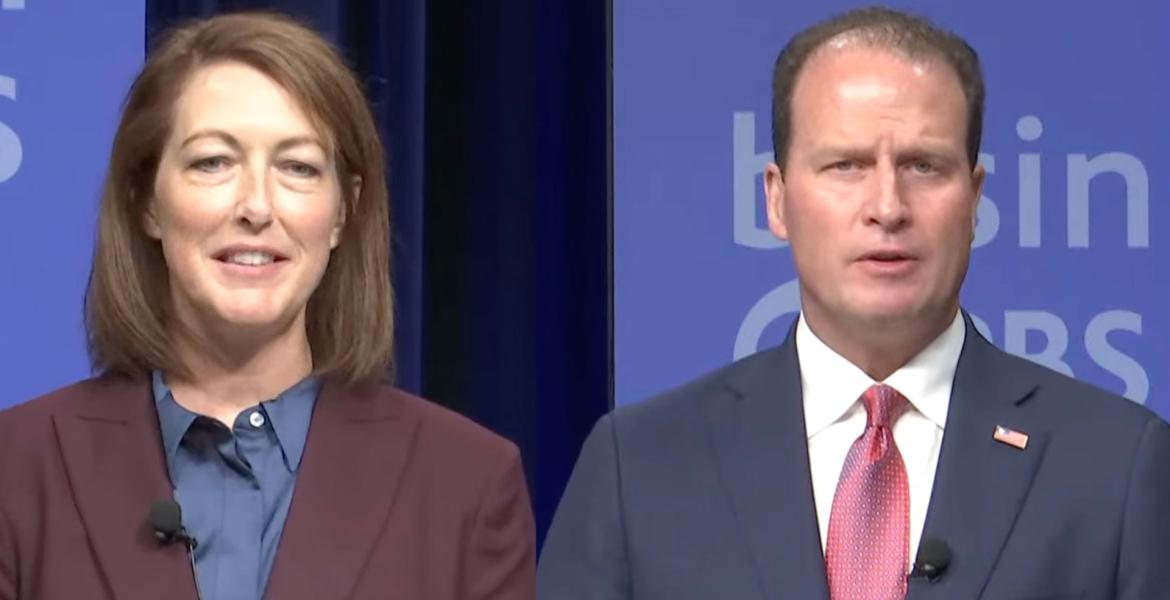
State Rep Drew Darby (L); Railroad Commissioner Wayne Christian (R)


Subscribe to the LIVE! Daily

Required
Post a comment to this article here: