
SAN ANGELO, TX — Bishop Michael J. Sis of the Diocese of San Angelo has released a pastoral message addressing the recent consecration of four bishops by the Society of St. Pius X (SSPX) without papal approval and the subsequent Vatican declaration of schism.
On July 1, 2026, the SSPX ordained four new bishops at its seminary in Écône, Switzerland, without the required approval from Pope Leo XIV. The ceremony lasted more than five hours and drew an estimated 17,000 people from around the world. It took place in open defiance of repeated personal appeals from Pope Leo XIV, who had asked the group not to proceed because the action would harm the unity of the Catholic Church.
In response, the Vatican’s Dicastery for the Doctrine of the Faith (DDF) issued a decree on July 2 declaring the SSPX in schism. The decree states that clerics and laypeople who formally adhere to the SSPX incur automatic excommunication. It also warns that while the Mass celebrated by SSPX priests remains valid, it is considered unlawful under Church rules. Confessions heard by SSPX priests and marriages witnessed by them are now considered invalid.
Bishop Sis noted that there is one SSPX chapel in the diocese — St. Michael the Archangel Chapel in Midland — where SSPX priests have visited monthly for many years to celebrate the Traditional Latin Mass.
“This has caused a serious rupture to the unity of the Church, and it is an occasion of mourning and sadness even in our diocese in West Texas,” Bishop Sis wrote.
He strongly encouraged Catholics in the diocese to remain in full communion with Pope Leo XIV and the bishops united with him.
“Communion with the successor of Peter is essential to the nature of the Catholic Church and is the foundation of its ecclesial life and mission,” the bishop stated.
Instead of attending SSPX Masses, Bishop Sis directed Catholics who wish to worship using the Traditional Latin Mass (TLM) to St. Margaret of Scotland Catholic Church at 2619 Era Avenue in San Angelo. That parish has special permission from the Holy See to celebrate the older form of the Mass each Sunday.
Bishop Sis also offered pastoral help to anyone who has been attending the Midland SSPX chapel and now wants to return to full communion with the Catholic Church in union with the Pope. He said the Holy See has provided clear steps for reconciliation and that he is willing to assist people personally.
“The Church, as a caring mother, will welcome with sincere affection and lively concern all those who wish to return to full communion,” the bishop wrote, quoting the Vatican document.
Background: Why the SSPX Is in Conflict with the Vatican
To understand the current situation, it helps to know a little about the history of the Society of St. Pius X (SSPX).
In the 1960s, the worldwide Catholic Church held a major meeting called the Second Vatican Council. Like many Christian denominations that have updated their worship and practices over time, the Catholic Church made several changes after that council. These included updating how the Mass is celebrated — moving from the older Latin service many people had used for centuries to a form that could be said in the local language and involved more participation from the congregation.
Some Catholics, including a French archbishop named Marcel Lefebvre, believed these changes went too far and weakened important traditional teachings and ways of worship. In 1970, Lefebvre founded the Society of St. Pius X (commonly called the SSPX) to train priests who would continue using the older Latin Mass and hold firmly to pre-council teachings.
The group grew, but it remained in tension with the official leadership of the Catholic Church in Rome. The biggest break came in 1988, when Lefebvre ordained four bishops without the Pope’s permission. In the Catholic Church, only the Pope can approve the ordination of new bishops, because bishops are seen as leaders who serve the entire worldwide Church under the Pope’s authority. Ordaining bishops without that approval is viewed as a serious act against Church unity — similar to a group of Methodist churches deciding to ordain their own bishops without approval from their denomination’s leadership.
Those 1988 ordinations led to excommunications at the time. While some penalties were later lifted, the SSPX has continued to operate independently. The group recognizes the Pope as the legitimate leader of the Catholic Church but believes it must resist many modern changes in teaching and worship. The Vatican, on the other hand, teaches that unity under the Pope is essential and that no group can set up its own bishops without permission.
The July 1, 2026 ordination of four new bishops was a repeat of the 1988 action on a larger scale. It was a long, public ceremony held in open defiance of direct requests from Pope Leo XIV to stop. The Vatican responded by declaring the SSPX in formal schism and warning Catholics not to formally join or support the group if they wish to remain in full communion with the Pope and the worldwide Catholic Church.
Why Some Traditional Latin Masses Are Approved by the Church
Many Catholics who love the older Latin Mass wonder why some Latin Masses are considered acceptable while others are not. The key difference lies in whether the group operates with permission from the Pope and the local bishop.
Groups such as the Priestly Fraternity of St. Peter (often called the FSSP) and certain approved parishes, like St. Margaret of Scotland in San Angelo, celebrate the Traditional Latin Mass with full permission from the Pope and the local bishop. These priests are properly authorized to serve in the Catholic Church. They remain united with the Pope and the bishops around the world, accept the overall leadership of the Church, and follow the rules set by the Pope and their local bishop.
Because they operate within the Church’s approved structure, all the sacraments they perform — including Mass, Confession, and Marriage — are considered both valid and lawful. This approach allows Catholics to worship using the older Latin form while staying in full communion with the rest of the Catholic Church.
In contrast, the SSPX operates without that permission on the matter of ordaining bishops and maintains an independent structure that puts it in conflict with the Pope’s authority. That independence is what led to the current declaration of schism.
Bishop Sis’s message points Catholics in the Diocese of San Angelo who want the Traditional Latin Mass toward the approved option at St. Margaret of Scotland Parish, where they can participate while remaining fully united with the Pope and the worldwide Catholic Church.
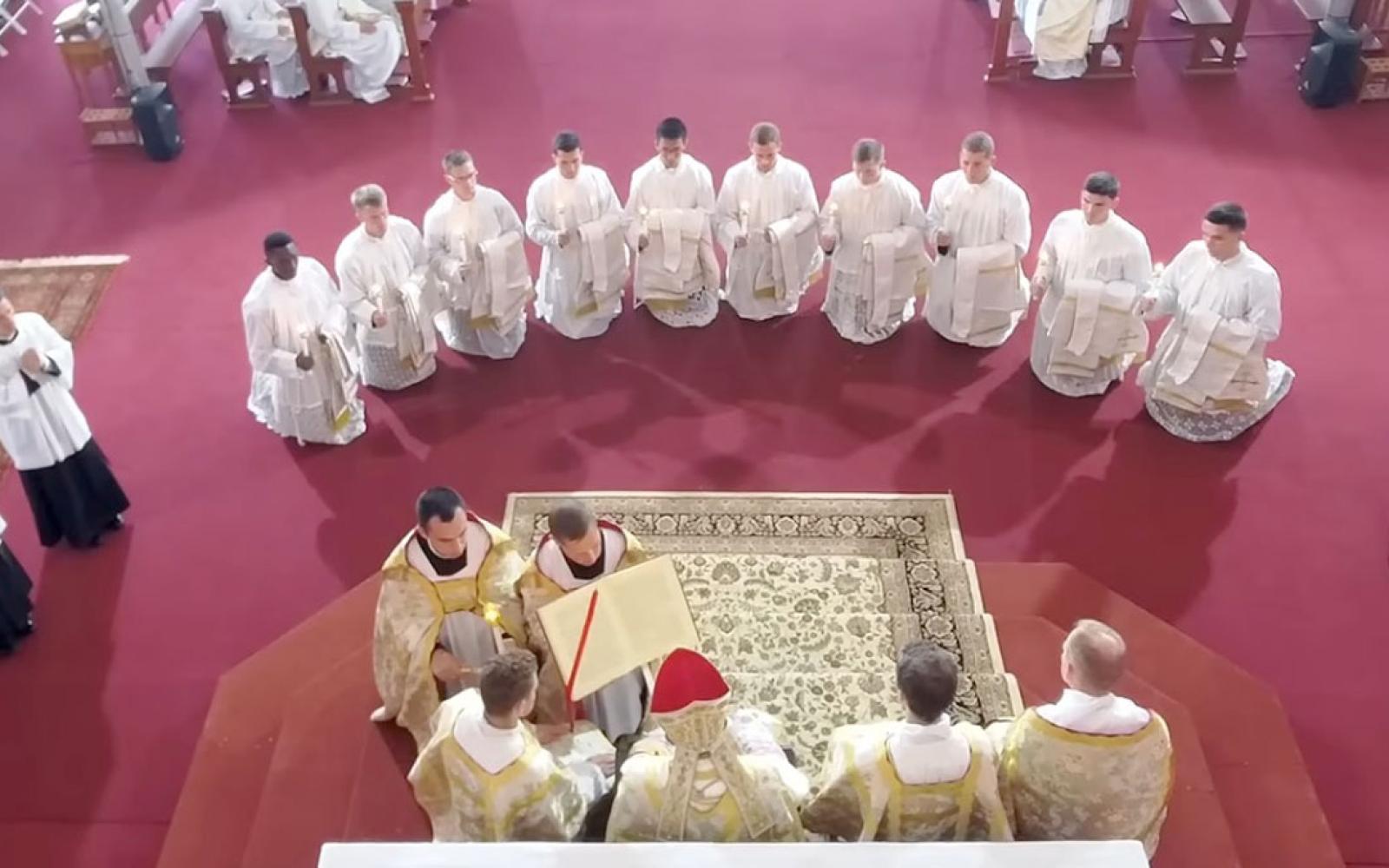
About the photo above: St. Thomas Aquinas Seminary Society of Saint Pius X Ordinations to the Diaconate and Priesthood on June 19, 2026. (Screenshot from Youtube https://www.youtube.com/live/PRspiF…)

Subscribe to the LIVE! Daily
Required
Comments
Listed By: Rita Repulsa
"While The Pope® maintains that it is spiritually true that the sun orbits the Earth, (albeit in a way that makes it appear as if the reverse were true,) and encourages followers to use models and calculations that treat the reverse to be fact for scientific, worldly reasons, the adherents of St. Atavus have been excommunicated for defying The Pope® and teaching pure geocentrism..."
- Log in or register to post comments
PermalinkListed By: Dirty Harry
Since Catholicism is a load of crap, doesn’t really matter does it?
- Log in or register to post comments
PermalinkListed By: Rita Repulsa
Careful with the criticisms. The Pope® might dine with you—or order some "takeout" for you.
- Log in or register to post comments
PermalinkDo something about their teen boy addiction. Then we'll talk...
- Log in or register to post comments
PermalinkListed By: Cajun Texan
The sad fact is, that followers of the church are oblivious to how often and how badly they have been raped by the church. Idiots flock to Catholicism, so let them deserve it.
- Log in or register to post comments
PermalinkPost a comment to this article here: